
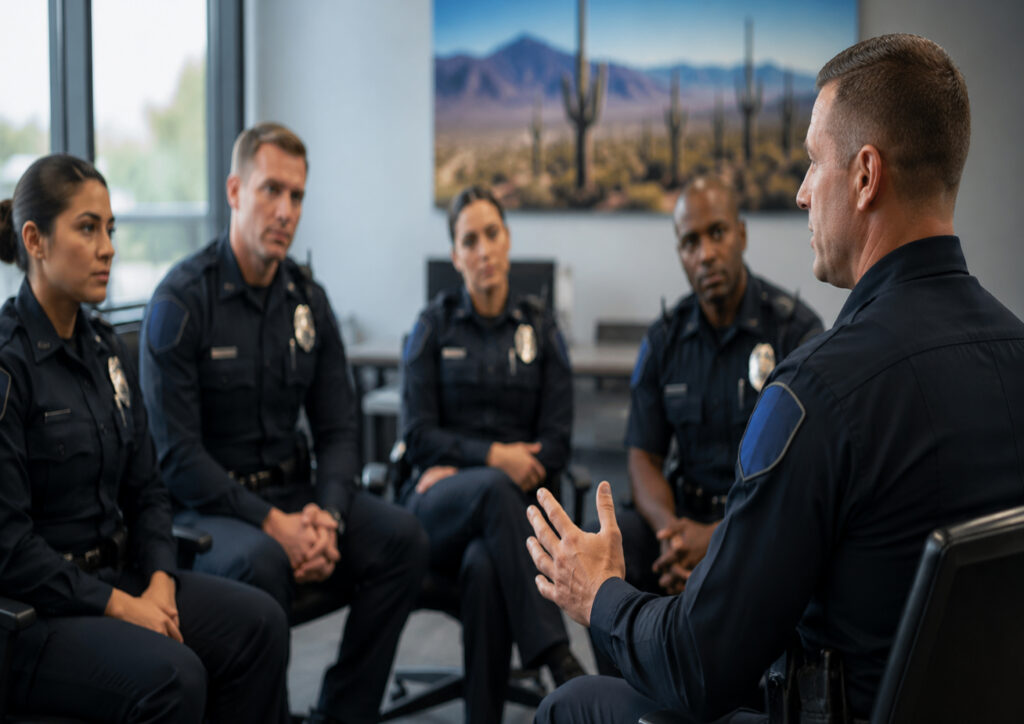
Mesa law enforcement and public safety departments operate in one of Arizona’s larger and more complex community environments. Officers may respond to high call volume, diverse public safety needs, behavioral health crises, traumatic incidents, traffic fatalities, domestic violence, community disputes, and fast-moving situations that require calm judgment under pressure. Because of these demands, officer wellness and psychological readiness cannot be treated as secondary concerns.
This is where Arizona Police Psychology programs become essential.
A well-designed police psychology program helps agencies support officers from hiring through long-term service. Through Pre Employment Evaluations, Wellness Visits, critical incident Debriefing, leadership consultation, and trauma-informed support, a qualified Police and Public Safety Psychologist Arizona can help Mesa departments improve hiring, reduce risk, strengthen officer resilience, and maintain high-performing teams.
Emovere Psychology provides specialized police and public safety psychological services for agencies in Mesa, Chandler, Gilbert, Queen Creek, Fountain Hills, and surrounding Arizona communities.
Why Mesa Departments Need Arizona Police Psychology Programs
Mesa agencies face a demanding public safety landscape. As a large city with varied neighborhoods, active traffic corridors, business districts, schools, and community needs, Mesa requires officers who can respond effectively to both routine calls and serious critical incidents.
Although officers receive extensive tactical and procedural training, psychological support plays a different role. It helps officers manage the emotional and cognitive demands of the profession over time. Without this support, repeated exposure to stress and trauma may contribute to burnout, reduced morale, communication problems, family strain, or performance concerns.
Therefore, Arizona Police Psychology programs give departments a structured way to care for personnel before challenges become crises. Instead of waiting until officers are overwhelmed, agencies can build support into the full employment lifecycle.
For Mesa departments, this proactive approach can improve retention, readiness, public trust, and organizational stability.
The Role of a Police and Public Safety Psychologist Arizona
A Police and Public Safety Psychologist Arizona provides specialized services tailored to the realities of law enforcement and public safety work. This differs from general mental health support because police work includes unique stressors, including danger, trauma exposure, public scrutiny, shift work, command structure, and the responsibility to make high-stakes decisions quickly.
A qualified Police Psychologist understands police culture and the concerns officers may have about confidentiality, stigma, and career impact. As a result, services can be delivered in a way that feels practical, professional, and relevant.
For Mesa agencies, this specialized support may include:
- Pre Employment Evaluations
- Wellness Visits
- Critical incident Debriefing
- Leadership consultation
- Officer trauma support
- Stress management resources
- Team communication support
- Resilience and readiness planning
- Public safety psychological consultation
Importantly, the goal is not only to help officers who are struggling. Instead, police psychology programs help agencies build stronger systems that support wellness, performance, and long-term resilience.
Pre Employment Evaluations Support Better Hiring
One of the most important parts of an Arizona Police Psychology program is the use of Pre Employment Evaluations. Hiring a law enforcement officer is a major investment, and each new hire affects department culture, liability exposure, public trust, and team performance.
A candidate may appear strong during interviews and background checks. However, those steps may not fully reveal how the candidate handles stress, authority, conflict, trauma, or criticism. Because of this, psychological evaluation adds an important layer of insight.
A Police and Public Safety Psychologist Arizona may assess areas such as:
- Emotional stability
- Stress tolerance
- Judgment and decision-making
- Impulse control
- Integrity and accountability
- Communication style
- Adaptability
- Respect for policy and authority
- Team orientation
- Resilience under pressure
For Mesa departments, these evaluations help identify candidates who are psychologically prepared for the demands of police work. Additionally, they help reduce the risk of hiring individuals who may struggle with emotional control, poor judgment, defensiveness, or interpersonal conflict.
Ultimately, Pre Employment Evaluations support stronger hiring decisions and help departments build healthier teams from the start.
Reducing Risk and Liability Through Psychological Screening
Poor hiring decisions can create long-term problems for public safety agencies. When a candidate is not psychologically suited for law enforcement, the department may later face complaints, performance issues, misconduct concerns, morale problems, turnover, or liability exposure.
Pre Employment Evaluations help reduce these risks by identifying potential concerns before employment begins. While no assessment can predict every future outcome, specialized screening gives agencies a more complete picture of candidate readiness.
For example, an evaluation may identify concerns related to impulse control, emotional volatility, poor stress coping, or difficulty accepting supervision. On the other hand, it may confirm that a candidate shows maturity, accountability, resilience, and strong judgment.
Because Mesa agencies operate in a complex environment, hiring accuracy matters. Officers must be able to communicate effectively, de-escalate conflict, manage pressure, and represent the department professionally.
A Police Psychologist helps departments make more defensible decisions by connecting psychological findings to law enforcement duties.
Wellness Visits Help Officers Stay Healthy
Beyond hiring, Wellness Visits are a central part of strong Arizona Police Psychology programs. These visits provide officers with confidential, structured opportunities to discuss stress, trauma exposure, sleep concerns, family strain, burnout, and career challenges.
Unlike crisis-based care, Wellness Visits are proactive. They allow officers to check in before stress becomes overwhelming. This matters because many officers continue functioning outwardly even while carrying significant emotional strain internally.
For Mesa officers, Wellness Visits may help with:
- Cumulative stress
- Emotional fatigue
- Trauma exposure
- Shift work challenges
- Family and relationship strain
- Burnout prevention
- Sleep disruption
- Career stress
- Peer or team conflict
- Healthy coping strategies
Additionally, regular Wellness Visits help normalize psychological support. When departments make wellness part of professional readiness, officers may be more willing to engage without fear of stigma.
A Police and Public Safety Psychologist Arizona can provide these visits in a way that respects law enforcement culture while helping officers maintain long-term resilience.
Addressing Cumulative Stress in Mesa Officers
Law enforcement stress often builds over time. Although one major critical incident can have a strong impact, many officers are affected by cumulative exposure to difficult calls, danger, conflict, grief, and human suffering.
Mesa officers may respond to traumatic events repeatedly throughout their careers. Over time, this exposure may contribute to irritability, cynicism, emotional numbness, sleep problems, reduced patience, or disconnection from family and peers.
Because these changes can develop gradually, officers may not immediately recognize them. Supervisors may also miss early warning signs if the officer continues performing basic duties.
Arizona Police Psychology programs help agencies address cumulative stress before it affects performance or wellbeing. Through Wellness Visits, Debriefing, leadership consultation, and trauma support, officers can learn to recognize stress patterns and develop healthier coping strategies.
As a result, departments can support officers earlier and reduce the likelihood of burnout or long-term impairment.
Debriefing After Critical Incidents
Critical incident Debriefing is another key component of police psychology programs. Mesa officers may encounter fatal crashes, suicides, violent assaults, officer-involved shootings, line-of-duty injuries, child-related trauma, or mass casualty events. Even when officers respond professionally, these incidents can leave a lasting emotional impact.
Debriefing provides a structured space for officers to process the incident, understand common stress reactions, and identify whether additional support may be needed. Importantly, Debriefing is not an investigation, disciplinary process, or performance review. Instead, it is focused on support, education, stabilization, and recovery.
A Police and Public Safety Psychologist Arizona may help officers understand reactions such as sleep disruption, intrusive memories, emotional numbness, hypervigilance, irritability, or difficulty concentrating. In many cases, knowing that these responses can be normal after trauma reduces fear and encourages healthier recovery.
For Mesa departments, Debriefing helps protect readiness while reinforcing that officer wellness is part of professional public safety service.
Supporting Officers After Trauma
Trauma support should not be limited to one conversation after a major incident. Some officers may feel the impact immediately, while others may notice symptoms days, weeks, or months later. Therefore, Arizona Police Psychology programs should include follow-up options.
A Police Psychologist can help officers process traumatic experiences in ways that are practical and respectful. Support may include education about trauma responses, coping strategies, emotional regulation skills, sleep support, and guidance on when additional care may be helpful.
Additionally, trauma support can help officers protect relationships outside of work. Law enforcement stress often affects family life, communication, patience, and emotional connection. By addressing trauma early, officers may be better able to maintain healthy relationships and long-term stability.
For Mesa agencies, trauma-informed support helps officers remain effective, connected, and resilient throughout their careers.
Leadership Consultation for Mesa Departments
Police leaders often face complex personnel and wellness decisions. A supervisor may notice that an officer seems withdrawn, irritable, or less engaged after a difficult incident. Command staff may need guidance on how to respond after a traumatic event, how to support a team, or how to build a wellness program that officers will trust.
A Police and Public Safety Psychologist Arizona can provide leadership consultation to help agencies respond thoughtfully and effectively.
This consultation may support:
- Officer readiness concerns
- Stress-related behavior changes
- Team morale issues
- Communication challenges
- Critical incident response
- Wellness program development
- Post-incident follow-up
- Retention and burnout prevention
- Supervisor guidance
- Organizational resilience planning
For Mesa departments, consultation can be especially valuable because larger agencies may involve multiple divisions, shifts, units, and leadership layers. With professional guidance, leaders can make better-informed decisions while supporting both personnel and operations.
Building Trust in Police Psychology Services
For Arizona Police Psychology programs to work, officers must trust the process. Trust depends on confidentiality, consistency, cultural understanding, and clear communication.
Officers may hesitate to seek support because they fear being judged, misunderstood, or viewed as unfit. Some may worry that discussing stress could affect assignments or advancement. Because of these concerns, agencies must choose providers who understand public safety culture and can communicate boundaries clearly.
A specialized Police Psychologist helps reduce stigma by presenting wellness support as part of readiness, not weakness. Over time, consistent access to professional support can make officers more comfortable using services earlier.
Emovere Psychology provides police psychology services designed to be practical, confidential, and tailored to law enforcement needs. This approach helps agencies build trust while strengthening officer wellbeing.
Improving Department Culture Through Wellness Programs
Department culture influences whether officers feel safe seeking support. If wellness is treated as an afterthought, officers may avoid services until stress becomes severe. However, when leadership presents wellness as part of professional performance, officers are more likely to participate.
Arizona Police Psychology programs help shift agencies from reactive support to proactive care. This can improve morale, communication, and team cohesion.
For Mesa departments, a strong wellness culture may lead to:
- Better officer engagement
- Reduced stigma
- Earlier help-seeking
- Stronger peer support
- Improved communication
- Lower burnout risk
- Healthier leadership interactions
- Increased retention
- Better readiness after critical incidents
Additionally, wellness programs can strengthen trust between officers and leadership. When personnel see that the department invests in their wellbeing, they may feel more valued and supported.
Supporting Retention and Career Longevity
Retention is a major concern for many law enforcement agencies. Recruiting, hiring, training, and developing officers takes significant time and resources. When officers leave due to burnout, stress, trauma exposure, or lack of support, departments lose valuable experience and stability.
Arizona Police Psychology programs can support retention by helping officers remain healthy and engaged throughout their careers. Wellness Visits, Debriefing, trauma support, and leadership consultation all contribute to career longevity.
Furthermore, officers who feel supported may be more likely to stay committed to the profession. They may also be better prepared to mentor newer officers, contribute to positive department culture, and serve the community effectively.
For Mesa agencies, retention is both a wellness issue and an operational priority. A stable workforce improves training continuity, morale, staffing, and public safety performance.
Connecting Officer Wellness to Community Trust
Officer wellness directly affects community service. Officers who are overwhelmed, sleep-deprived, burned out, or carrying unresolved trauma may have more difficulty with patience, communication, judgment, and emotional regulation.
On the other hand, officers who are supported and resilient are better prepared to de-escalate conflict, communicate clearly, make sound decisions, and maintain professionalism under pressure.
Therefore, Arizona Police Psychology programs benefit both officers and the communities they serve. For Mesa residents, healthier officers can contribute to better public interactions, stronger trust, and more consistent service.
Public safety agencies often focus on external outcomes, such as response times, crime reduction, and community engagement. However, those outcomes are influenced by the internal wellbeing of the people doing the work.
A strong wellness model helps connect officer support with department performance.
Pre Employment Evaluations and Long-Term Wellness
A strong police psychology program connects hiring and wellness. Pre Employment Evaluations help departments identify candidates with the emotional stability, judgment, stress tolerance, and resilience needed for law enforcement. After hiring, Wellness Visits and Debriefing help officers maintain those qualities throughout their careers.
This full-lifecycle approach is important because police work changes people over time. Even candidates who begin with strong resilience may need support after years of exposure to trauma, conflict, and pressure.
By combining psychological screening with ongoing wellness services, Mesa departments can create a more complete support system. This approach helps agencies hire better, support officers longer, and reduce preventable problems.
Local Relevance for Mesa and Nearby Communities
Mesa’s public safety needs are distinct, but nearby Arizona communities also benefit from specialized police psychology programs.
Chandler agencies often face larger department structures, diverse call types, and evolving wellness needs. Gilbert and Queen Creek continue to grow rapidly, creating increased hiring demands and public safety expectations. Fountain Hills may have smaller agency structures, yet officers there still encounter traumatic calls and benefit from structured support.
Across Mesa, Chandler, Gilbert, Queen Creek, and Fountain Hills, agencies can use Arizona Police Psychology services to improve hiring, wellness, Debriefing, leadership consultation, and retention.
Because each agency has different needs, programs should be customized. A larger department may need regular Wellness Visits and leadership consultation across multiple units. Meanwhile, a smaller agency may need access to Debriefing and targeted support after critical incidents.
A qualified Police and Public Safety Psychologist Arizona can help each department build services that fit its size, culture, and operational goals.
Common Mistakes Agencies Make Without Police Psychology Programs
Even well-intentioned departments can make mistakes when psychological support is not structured. Sometimes agencies wait until officers show visible distress before offering help. At other times, they use generic services that do not fully understand police culture.
Common mistakes include:
- Treating wellness as reactive instead of proactive
- Relying only on informal peer support
- Skipping specialized Pre Employment Evaluations
- Failing to provide Debriefing after critical incidents
- Overlooking cumulative stress
- Not communicating confidentiality clearly
- Ignoring family strain and burnout
- Providing support once but not following up
- Using providers unfamiliar with law enforcement
- Not involving leadership in wellness planning
Fortunately, these mistakes can be avoided. With support from a Police and Public Safety Psychologist Arizona, departments can create programs that are structured, credible, and aligned with public safety needs.
What Mesa Departments Should Look for in a Program
When evaluating Arizona Police Psychology programs, Mesa departments should look for services that are specialized, confidential, practical, and customizable. The provider should understand law enforcement culture and offer support across the full employment lifecycle.
Strong programs should include:
- Law enforcement-specific Pre Employment Evaluations
- Confidential Wellness Visits
- Critical incident Debriefing
- Leadership consultation
- Trauma-informed officer support
- Clear communication about confidentiality
- Support for cumulative stress and burnout
- Services tailored to agency size and culture
- Practical recommendations for command staff
- Local understanding of Arizona public safety needs
Additionally, the program should build trust with officers. If services feel generic, overly clinical, or disconnected from police work, officers may not engage. However, when support feels relevant and respectful, participation is more likely to increase.
Why Agencies Choose Emovere Psychology
Emovere Psychology specializes in police and public safety psychological services for Arizona agencies. With a focus on law enforcement needs, Emovere Psychology helps departments improve hiring decisions, support officer wellness, and respond effectively after critical incidents.
Services include:
- Pre Employment Evaluations
- Wellness Visits
- Critical Incident Debriefing
- Leadership consultation
- Officer stress and trauma support
- Team communication support
- Arizona Police Psychology services
- Public safety psychological support
For Mesa departments, Emovere Psychology provides services that are professional, confidential, and tailored to the realities of police work. Rather than offering generic support, Emovere Psychology helps agencies create practical systems that strengthen officer wellbeing and department readiness.
Additionally, Emovere Psychology supports agencies across Mesa, Chandler, Gilbert, Queen Creek, Fountain Hills, and surrounding Arizona communities. This local focus allows services to be adapted to different department sizes, cultures, and operational needs.
Building Stronger Mesa Public Safety Teams
Arizona Police Psychology programs help Mesa departments support officers before, during, and after the most challenging moments of public safety work. Through Pre Employment Evaluations, agencies can improve hiring accuracy and reduce risk. Through Wellness Visits, officers can address stress before it becomes crisis. Through Debriefing, departments can respond responsibly after critical incidents. Through leadership consultation, command staff can make informed decisions that protect both personnel and operations.
Ultimately, strong psychological support helps build stronger public safety teams. Officers who feel supported are more likely to remain resilient, engaged, and prepared to serve. Departments that invest in wellness are better positioned to improve retention, morale, readiness, and community trust.
For Mesa agencies, the value of Arizona Police Psychology programs is clear. These services are not optional extras. They are essential tools for modern law enforcement leadership.
Partner with Emovere Psychology
Mesa departments should know that Arizona Police Psychology programs can improve hiring, support officer wellness, strengthen critical incident response, and protect long-term department performance. When services are tailored to law enforcement, they help agencies care for personnel while maintaining high standards of public safety.
Emovere Psychology provides specialized Police and Public Safety Psychologist Arizona services for law enforcement and public safety agencies in Mesa, Chandler, Gilbert, Queen Creek, Fountain Hills, and surrounding communities.
Through Pre Employment Evaluations, Wellness Visits, Debriefing, leadership consultation, and customized Arizona Police Psychology support, Emovere Psychology helps departments build healthier officers, stronger teams, and more resilient organizations.
Contact Emovere Psychology today to schedule a consultation, request more information, or discuss