
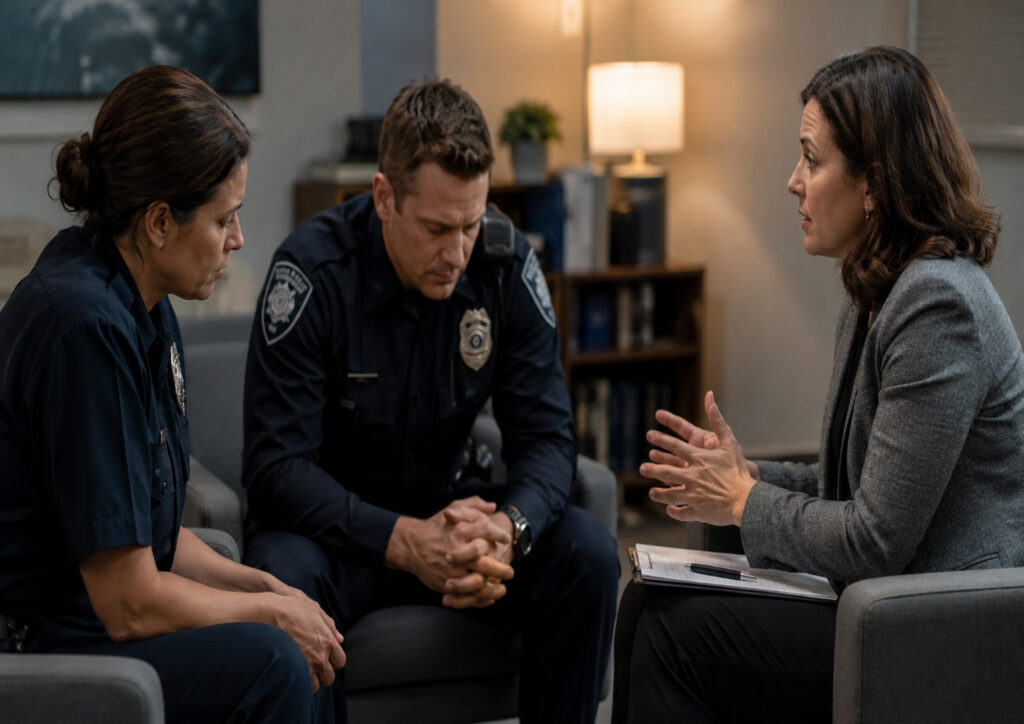
Law enforcement agencies in Chandler operate in a demanding public safety environment. Officers may respond to violent incidents, fatal collisions, child-related trauma, domestic violence, suicides, officer-involved events, and high-stress calls that leave a lasting emotional impact. Even when officers perform with professionalism and control, difficult incidents can affect mental clarity, sleep, relationships, morale, and long-term resilience.
For this reason, post-incident Debriefing has become an important part of modern Arizona Police Psychology support. When facilitated by a qualified Police and Public Safety Psychologist Arizona, Debriefing gives officers a structured way to process critical incidents, understand stress reactions, and access follow-up support when needed.
For Chandler agencies, Debriefing is not just a wellness resource. It is also a readiness tool that helps protect officers, strengthen teams, reduce burnout risk, and support long-term department performance.
Emovere Psychology provides specialized police psychology services for law enforcement and public safety agencies in Chandler, Gilbert, Queen Creek, Mesa, Fountain Hills, and surrounding Arizona communities.
Why Post-Incident Debriefing Matters for Chandler Agencies
Chandler agencies serve a large and active community with diverse public safety needs. Officers may move from routine calls to highly traumatic scenes with little warning. Although training helps officers respond effectively in the moment, the psychological impact of repeated exposure can build over time.
Post-incident Debriefing helps agencies respond after difficult events in a structured and professional way. Instead of expecting officers to simply return to normal, departments can provide support that helps personnel understand what they experienced and how it may affect them.
Additionally, Debriefing sends an important message to officers: psychological readiness matters. When agencies invest in officer wellbeing after difficult calls, they strengthen trust, morale, and resilience.
A Police and Public Safety Psychologist Arizona helps ensure the process is appropriate for law enforcement culture. Officers often respond better when support is provided by someone who understands police work, confidentiality concerns, trauma exposure, and the importance of operational readiness.
What Post-Incident Debriefing Is
Post-incident Debriefing is a structured support service offered after a critical or traumatic event. Its purpose is to help officers process the emotional and psychological impact of the incident, understand common stress responses, and identify whether additional support may be beneficial.
Importantly, Debriefing is not an investigation. It is not discipline, performance review, or tactical evaluation. Instead, it focuses on officer support, education, stabilization, and recovery.
During a Debriefing, a Police Psychologist may help officers understand reactions such as:
- Sleep disruption
- Irritability
- Emotional numbness
- Intrusive thoughts or images
- Fatigue
- Hypervigilance
- Difficulty concentrating
- Increased frustration
- Withdrawal from others
- Changes in mood or appetite
These reactions can occur after exposure to traumatic or high-impact events. However, many officers may minimize them because they believe stress is simply part of the job. A Debriefing helps normalize these reactions while also encouraging healthy coping and early support.
Why a Police and Public Safety Psychologist Arizona Is Essential
Law enforcement Debriefing should be handled by someone who understands the realities of police work. A general mental health provider may be supportive, but public safety psychology requires specialized knowledge of trauma, agency culture, command structure, confidentiality, officer identity, and critical incident response.
A Police and Public Safety Psychologist Arizona brings this specialized understanding to Chandler agencies. Because officers face unique responsibilities, the support they receive must be practical, respectful, and relevant.
For example, officers may worry that discussing stress could affect their career. Others may be hesitant because they do not want to appear weak to peers or supervisors. A specialized police psychologist understands these concerns and can explain the purpose and limits of Debriefing clearly.
Furthermore, a police psychologist can help leadership determine when Debriefing is appropriate, how it should be structured, who should participate, and what follow-up may be needed. This professional guidance helps agencies avoid inconsistent or reactive responses after critical incidents.
Incidents That May Lead to Debriefing
Not every difficult call requires a formal Debriefing. However, certain incidents may have a stronger psychological impact and should prompt agencies to consider structured support.
Chandler agencies may use Debriefing after:
- Officer-involved shootings
- Fatal traffic collisions
- Line-of-duty injuries
- Child deaths or serious child abuse cases
- Suicides or attempted suicides
- Violent assaults
- Mass casualty events
- Serious domestic violence incidents
- Death notifications
- Critical incidents involving fellow officers
- Events with intense media or public attention
- Calls that deeply affect multiple personnel
In many cases, the emotional impact depends not only on the type of incident but also on the officer’s role, personal history, proximity to the event, and cumulative stress load. Therefore, a Police and Public Safety Psychologist Arizona can help agencies assess the situation and determine the best response.
How Debriefing Supports Officers After Trauma
Traumatic incidents can affect officers in different ways. Some may feel shaken immediately, while others may feel numb or detached. Meanwhile, certain officers may not notice symptoms until days or weeks later.
Post-incident Debriefing gives officers a structured opportunity to pause, reflect, and receive education about common reactions. This can reduce confusion and help officers understand that stress responses do not mean they are failing.
Additionally, Debriefing can help officers identify coping strategies. These may include improving sleep routines, talking with trusted peers, reducing isolation, monitoring stress symptoms, and seeking additional support when needed.
For Chandler agencies, this process helps protect officer wellness while also supporting operational readiness. Officers who process traumatic exposure in healthy ways are often better prepared to continue serving with clarity and professionalism.
Supporting Cumulative Stress
Although some incidents are clearly traumatic, many officers are affected by cumulative stress. This type of stress builds gradually after repeated exposure to danger, conflict, grief, violence, and human suffering.
Chandler officers may handle multiple difficult calls across a career. Over time, even strong and experienced officers can experience emotional fatigue, irritability, cynicism, sleep problems, family strain, or reduced motivation.
Debriefing after major incidents can help reduce the risk of cumulative stress going unnoticed. However, it should also be connected to ongoing support, such as Wellness Visits and leadership consultation.
A Police Psychologist can help officers recognize patterns related to cumulative stress and develop healthier ways to recover. As a result, Debriefing becomes part of a larger wellness strategy rather than a single event response.
Debriefing as a Readiness Tool
Readiness is not only physical or tactical. Officers must also be mentally and emotionally prepared to make sound decisions under pressure. After a critical incident, stress can affect attention, sleep, emotional regulation, and decision-making.
Post-incident Debriefing supports readiness by helping officers understand the impact of the event and identify whether they need additional support. It does not automatically mean an officer is unable to work. Instead, it helps agencies respond responsibly and thoughtfully.
For command staff, this distinction matters. Agencies need to maintain operations while also caring for personnel. A Police and Public Safety Psychologist Arizona can help leadership balance these priorities in a professional and ethical way.
Over time, agencies that use Debriefing effectively may see stronger morale, better communication, and improved trust between officers and leadership.
How Debriefing Helps Teams
Critical incidents rarely affect only one person. Patrol officers, detectives, supervisors, dispatchers, and support personnel may all be impacted by the same event. Because reactions can vary, teams may benefit from a shared opportunity to understand what happened psychologically.
Debriefing can help teams recognize that different reactions are normal. One officer may feel anger, another may feel sadness, while someone else may feel emotionally numb. Without explanation, these differences can create confusion or isolation. With professional support, however, officers can better understand their own responses and the responses of colleagues.
Additionally, Debriefing can strengthen team cohesion. Officers who feel supported after difficult events may be more likely to trust one another, communicate openly, and check in on peers.
For Chandler agencies, where larger teams may operate across divisions and shifts, structured Debriefing can help create consistency in post-incident support.
Confidentiality and Trust
Confidentiality is one of the most important parts of effective Debriefing. Officers need to trust that the process is designed to support them rather than evaluate or discipline them.
A qualified Police Psychologist explains the purpose of Debriefing clearly and discusses any limits of confidentiality. This transparency helps reduce fear and encourages honest participation.
Without trust, officers may avoid the process or say very little. Therefore, agencies must communicate carefully. Debriefing should never be presented as punishment or as a test of emotional toughness. Instead, it should be framed as a professional support service connected to wellness and readiness.
Emovere Psychology provides Debriefing services that are tailored to law enforcement culture, helping agencies build trust while supporting officer wellbeing.
The Role of Leadership in Post-Incident Support
Leadership response after a critical incident can shape how officers experience support. When command staff acknowledges the impact of difficult events and provides appropriate resources, officers may feel more valued and less isolated.
However, supervisors may not always know what to say or how to follow up. They may also be managing operational demands, administrative responsibilities, media concerns, and staffing issues.
A Police and Public Safety Psychologist Arizona can provide consultation to help leaders respond effectively. This may include guidance on timing, communication, follow-up, and signs that an officer may need additional support.
Effective leadership support may include:
- Communicating clearly about available resources
- Encouraging participation without pressure
- Protecting confidentiality
- Checking in after the initial Debriefing
- Recognizing stress-related behavior changes
- Supporting supervisors who were also affected
- Maintaining a culture of wellness and professionalism
For Chandler agencies, leadership consultation can make Debriefing more effective and help ensure officers receive consistent support.
Connecting Debriefing With Wellness Visits
Debriefing works best when connected to ongoing services such as Wellness Visits. While Debriefing focuses on a specific critical incident, Wellness Visits provide regular opportunities for officers to discuss stress, trauma exposure, family strain, sleep issues, burnout, and career challenges.
This connection is important because trauma reactions may not appear immediately. An officer may participate in Debriefing and feel stable at first, then notice sleep disruption or irritability later. Wellness Visits provide a confidential follow-up pathway.
Additionally, Wellness Visits help normalize psychological support before critical incidents occur. When officers already see police psychology as part of professional readiness, they may be more open to Debriefing after difficult events.
For Chandler agencies, combining Debriefing and Wellness Visits creates a more complete support system.
How Debriefing Helps Reduce Burnout
Burnout can develop when officers experience prolonged stress without adequate recovery. Over time, officers may become emotionally exhausted, cynical, detached, or less motivated. They may also struggle with patience, communication, and decision-making.
Post-incident Debriefing helps reduce burnout risk by giving officers an opportunity to address difficult experiences rather than bury them. Although Debriefing alone cannot prevent all burnout, it can be a valuable part of a broader wellness strategy.
Furthermore, Debriefing shows officers that the agency recognizes the impact of the work. This can improve morale and reduce the sense that officers are expected to carry trauma alone.
A Police and Public Safety Psychologist Arizona can help agencies identify burnout risks and recommend additional supports when needed.
Supporting Dispatchers and Other Public Safety Personnel
Critical incidents often affect more than sworn officers. Dispatchers, communications staff, records personnel, supervisors, and civilian employees may also be impacted. For example, dispatchers may hear traumatic events unfold in real time while remaining calm and focused.
Chandler agencies can use police psychology services to support the broader public safety team. Depending on the incident, Debriefing may include dispatchers or other personnel who were directly involved.
This inclusive approach matters because public safety is a team effort. When all affected personnel receive appropriate support, the agency strengthens overall resilience.
A Police Psychologist can help determine who may benefit from Debriefing and how to structure support for different roles within the agency.
How Debriefing Supports Community Trust
Officer wellness and public trust are closely connected. Officers who are overwhelmed, sleep-deprived, or carrying unresolved trauma may find it harder to communicate calmly, regulate emotions, or make measured decisions.
By supporting officers after difficult incidents, agencies help protect the quality of service provided to the community. Healthy, resilient officers are better prepared to respond professionally and maintain trust during challenging interactions.
For Chandler agencies, this connection is especially important because public safety work often occurs under close community attention. Debriefing helps officers recover from difficult events and continue serving with professionalism.
Therefore, post-incident support is not only an internal wellness practice. It is also part of responsible public safety leadership.
Local Relevance for Chandler and Surrounding Communities
Chandler agencies face complex operational demands, but neighboring Arizona communities also benefit from specialized police psychology services.
Gilbert and Queen Creek are rapidly growing communities where public safety needs continue to expand. Agencies in these areas benefit from Debriefing, Pre Employment Evaluations, Wellness Visits, and leadership consultation as they build strong teams.
Mesa departments often operate in a large and diverse environment with high call volume and varied public safety challenges. As a result, structured psychological support can help officers manage cumulative stress and traumatic exposure.
Fountain Hills agencies may have smaller teams, but they still respond to serious incidents. Smaller agencies often benefit from outside psychological support because they may not have extensive internal wellness resources.
Across Chandler, Gilbert, Queen Creek, Mesa, and Fountain Hills, Arizona Police Psychology services help agencies support personnel and maintain readiness.
The Connection Between Debriefing and Pre Employment Evaluations
Post-incident support begins with strong hiring. Pre Employment Evaluations help agencies identify candidates who are psychologically prepared for law enforcement work. These evaluations may assess emotional stability, stress tolerance, judgment, impulse control, communication, and resilience.
However, even psychologically strong candidates need support after they begin service. Police work exposes officers to repeated stress and trauma, which can affect anyone over time.
Therefore, Pre Employment Evaluations and Debriefing work together. Evaluations help departments hire candidates with appropriate readiness, while Debriefing helps officers maintain wellness after difficult incidents.
A Police and Public Safety Psychologist Arizona can support agencies across the full employment lifecycle, from candidate screening to ongoing officer wellness and critical incident response.
Avoiding Common Mistakes After Critical Incidents
Even well-intentioned agencies can make mistakes after critical incidents. Sometimes leaders assume officers are fine because they appear calm. Other times, support is offered once but not followed up later.
Common mistakes include:
- Waiting until officers show visible distress
- Treating Debriefing as discipline or evaluation
- Using informal conversations as a substitute for professional support
- Failing to explain confidentiality
- Overlooking dispatchers or supervisors
- Ignoring cumulative stress
- Offering support too late
- Not connecting Debriefing with Wellness Visits
- Relying on generic providers unfamiliar with police culture
Fortunately, these mistakes can be avoided with planning and professional guidance. A specialized Police Psychologist can help agencies build clear protocols for post-incident support.
A strong internal coordination approach also helps ensure officers receive consistent care after difficult events.
Why Agencies Choose Emovere Psychology
Emovere Psychology specializes in police and public safety psychological services for Arizona agencies. With a focus on law enforcement needs, Emovere Psychology helps departments support officers, improve hiring decisions, and respond effectively after critical incidents.
Services include:
- Post-incident Debriefing
- Wellness Visits
- Pre Employment Evaluations
- Leadership consultation
- Officer stress and trauma support
- Team communication support
- Arizona Police Psychology services
- Public safety psychological support
For Chandler agencies, Emovere Psychology provides professional support that is practical, confidential, and tailored to police culture. Services are designed to help officers process difficult experiences, reduce burnout risk, and maintain long-term readiness.
Additionally, Emovere Psychology understands that agencies need support before, during, and after critical incidents. This comprehensive approach helps departments build healthier teams and stronger systems of care.
Building a Stronger Post-Incident Support Plan
A strong Debriefing process should be planned before a critical incident occurs. Agencies should know who to contact, when Debriefing may be appropriate, how to communicate the service, and what follow-up options are available.
Chandler agencies may benefit from considering:
- Which incidents should prompt Debriefing
- Who should participate
- How soon support should be offered
- How confidentiality will be explained
- Whether follow-up Wellness Visits are needed
- How supervisors should check in with officers
- How dispatchers and support staff will be included
- How Debriefing fits into broader wellness programming
With guidance from a Police and Public Safety Psychologist Arizona, agencies can build a process that supports officers while respecting operational needs.
Long-Term Benefits of Post-Incident Debriefing
Post-incident Debriefing offers both immediate and long-term benefits. In the short term, it helps officers understand stress reactions and receive support after difficult events. Over time, it can strengthen resilience, reduce stigma, improve morale, and support retention.
For Chandler agencies, these benefits matter because public safety work is demanding and ongoing. Officers need more than crisis response. They need a system of support that recognizes the realities of the profession.
When Debriefing is combined with Wellness Visits, Pre Employment Evaluations, and leadership consultation, agencies create a more complete Arizona Police Psychology strategy.
This approach helps departments support officers from the beginning of their careers through the most difficult moments of service.
Partner with Emovere Psychology
Chandler agencies use police psychologists for post-incident Debriefing because critical incidents can affect officers, teams, and department culture. Professional Debriefing provides a structured way to process difficult events, normalize stress reactions, support recovery, and protect long-term readiness.
Emovere Psychology provides specialized Police and Public Safety Psychologist Arizona services for law enforcement and public safety agencies in Chandler, Gilbert, Queen Creek, Mesa, Fountain Hills, and surrounding Arizona communities.
Through post-incident Debriefing, Wellness Visits, Pre Employment Evaluations, and leadership consultation, Emovere Psychology helps agencies support officers, reduce burnout risk, strengthen resilience, and maintain high-performing public safety teams.
Contact Emovere Psychology today to schedule a consultation, request more information, or discuss