
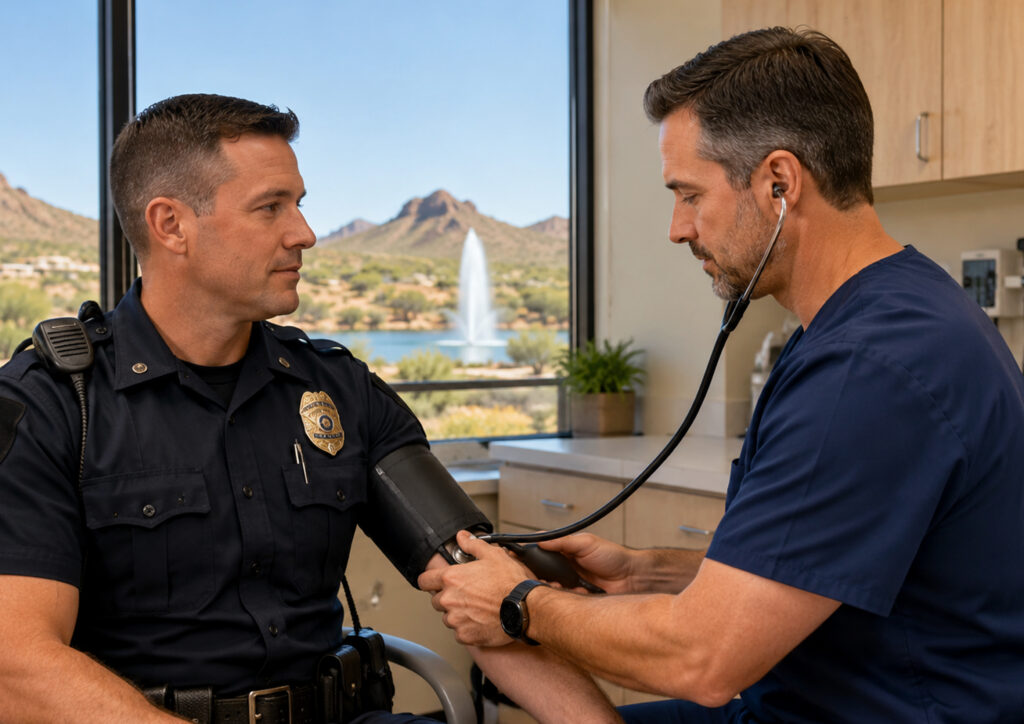
Law enforcement officers in Fountain Hills serve a community where professionalism, consistency, and trust are essential. Although Fountain Hills may have a smaller public safety environment than larger Arizona cities such as Mesa, Chandler, or Gilbert, officers still face serious stressors. They respond to difficult calls, manage conflict, encounter trauma, support residents in crisis, and make decisions that can affect safety, liability, and community confidence.
For this reason, Wellness Visits are becoming an important part of modern law enforcement support. When provided by a qualified Police and Public Safety Psychologist Arizona, Wellness Visits help officers manage stress, prevent burnout, improve resilience, and maintain the emotional readiness needed for strong performance.
For Fountain Hills agencies, Wellness Visits are not simply a mental health benefit. Instead, they are a proactive performance tool. They help officers stay focused, communicate effectively, recover from difficult events, and continue serving the community with professionalism.
Emovere Psychology provides specialized Arizona Police Psychology services for law enforcement and public safety agencies in Fountain Hills, Mesa, Chandler, Gilbert, Queen Creek, and surrounding communities.
Why Officer Wellness Matters in Fountain Hills
Fountain Hills law enforcement agencies serve a community where officers may have frequent contact with residents, businesses, schools, and local organizations. In smaller communities, public interactions often feel more personal. Officers may see the same families, victims, witnesses, or community members across multiple situations.
Because of this close connection, officer performance has a direct impact on public trust. When officers are healthy, resilient, and emotionally regulated, they are better prepared to communicate clearly and respond with sound judgment. However, when officers are overwhelmed, burned out, or carrying unresolved stress, performance may suffer.
Wellness Visits help agencies address this challenge before it becomes a crisis. Rather than waiting until an officer is visibly struggling, departments can provide regular support that helps personnel maintain readiness over time.
Additionally, Wellness Visits reinforce the idea that psychological health is part of professional readiness. Just as officers maintain training, equipment, and physical fitness, they also benefit from maintaining emotional resilience.
What Wellness Visits Are
Wellness Visits are confidential, structured check-ins with a qualified mental health professional who understands law enforcement. For police officers, these visits are most effective when provided by a Police and Public Safety Psychologist Arizona with experience in public safety culture, trauma exposure, shift work, and operational stress.
A Wellness Visit may focus on stress, sleep, family strain, trauma exposure, burnout, emotional regulation, career concerns, or coping strategies. Importantly, these visits are not designed to punish, evaluate, or discipline officers. Instead, they provide a supportive space for officers to talk through challenges and strengthen resilience.
In many cases, officers may not need intensive therapy. They may simply need a confidential opportunity to process what they are carrying, identify stress patterns, and learn practical strategies for recovery.
For Fountain Hills agencies, Wellness Visits can be especially helpful because smaller departments may not always have extensive internal wellness resources. Therefore, access to a trusted Police Psychologist gives officers professional support without placing the full burden on supervisors or peers.
How Wellness Visits Improve Officer Performance
Officer performance depends on more than technical skill. While training, policy knowledge, and tactical ability are essential, psychological readiness also shapes how officers perform in the field.
Wellness Visits support performance by helping officers manage the factors that can interfere with clear thinking and professional behavior. Stress, fatigue, trauma exposure, and burnout can affect decision-making, patience, communication, and emotional control.
Through regular Wellness Visits, officers can build stronger coping skills and improve self-awareness. As a result, they may be better prepared to remain calm during conflict, de-escalate tense encounters, communicate with residents, and make sound decisions under pressure.
For Fountain Hills agencies, this can support stronger public service. Officers who are mentally and emotionally prepared are more likely to perform consistently, maintain professionalism, and contribute to a healthier department culture.
Supporting Emotional Regulation Under Pressure
Law enforcement requires emotional control in difficult moments. Officers may encounter angry individuals, traumatic scenes, family disputes, mental health crises, or dangerous situations. Even when emotions run high around them, officers must remain composed.
Wellness Visits help officers strengthen emotional regulation. During these visits, a Police and Public Safety Psychologist Arizona may help officers identify stress triggers, recognize physical signs of escalation, and develop strategies for staying grounded.
This matters because emotional regulation directly affects performance. An officer who can manage frustration, fear, anger, or fatigue is better prepared to communicate clearly and make appropriate decisions.
Additionally, emotional regulation protects community trust. Residents often judge the professionalism of an agency based on officer interactions. When officers respond calmly and respectfully, even during difficult calls, they strengthen public confidence.
Preventing Burnout Before It Affects Service
Burnout often develops gradually. At first, an officer may feel tired or less motivated. Over time, however, burnout can lead to emotional exhaustion, cynicism, reduced patience, irritability, and decreased engagement.
For law enforcement agencies, burnout is a performance issue as well as a wellness concern. Officers experiencing burnout may struggle with communication, decision-making, teamwork, and follow-through.
Wellness Visits help identify burnout early. A Police Psychologist can help officers recognize warning signs and develop healthier coping strategies before stress begins affecting work performance.
In Fountain Hills, where smaller agencies may depend heavily on each officer, preventing burnout is especially important. Even one officer’s stress can affect scheduling, morale, teamwork, and department readiness. Therefore, regular Wellness Visits can help protect both individual officers and the agency as a whole.
Addressing Cumulative Stress
Not all stress comes from one major event. In policing, stress often builds over time through repeated exposure to conflict, trauma, danger, and human suffering. This is known as cumulative stress.
Fountain Hills officers may respond to serious crashes, suicides, domestic violence calls, medical emergencies, and other difficult situations. Although each call may be handled professionally, the repeated emotional load can become heavy.
Cumulative stress may appear as:
- Sleep problems
- Irritability
- Emotional numbness
- Short temper
- Increased cynicism
- Difficulty concentrating
- Withdrawal from others
- Family conflict
- Reduced motivation
- Feeling constantly on alert
Wellness Visits provide a way to address this stress before it becomes overwhelming. Additionally, regular check-ins help officers notice changes that may otherwise be ignored or minimized.
A Police and Public Safety Psychologist Arizona can help officers understand how cumulative stress affects the mind and body. More importantly, the psychologist can help officers develop realistic recovery strategies that fit law enforcement schedules and responsibilities.
Improving Decision-Making and Judgment
Clear judgment is essential in police work. Officers often make decisions with limited information, high emotion, and time pressure. Stress and fatigue can interfere with this process by narrowing attention, increasing reactivity, or reducing patience.
Wellness Visits support better decision-making by helping officers manage the psychological factors that influence judgment. For example, an officer who is sleeping poorly may be more reactive during conflict. Another officer carrying unresolved trauma may have difficulty staying emotionally present during certain calls.
Through Wellness Visits, officers can identify these patterns and take steps to address them. As a result, they may be better prepared to think clearly, assess situations accurately, and respond appropriately.
For Fountain Hills agencies, improved decision-making supports safety, professionalism, and reduced liability. It also helps officers feel more confident in their ability to manage difficult situations.
Strengthening Communication Skills
Communication is one of the most important tools in law enforcement. Officers must speak with victims, suspects, witnesses, families, colleagues, supervisors, and community members. They must also communicate under stress, during conflict, and in emotionally charged situations.
Wellness Visits can improve communication by helping officers understand how stress affects tone, listening, patience, and emotional response. When officers are overwhelmed, they may become more abrupt, defensive, withdrawn, or reactive.
A Police Psychologist can help officers develop practical communication strategies, especially for high-stress interactions. These strategies may support de-escalation, peer relationships, family communication, and supervisor interactions.
Additionally, better communication improves team cohesion. Officers who can talk openly, receive feedback, and manage conflict professionally contribute to a healthier department culture.
Supporting Family and Personal Relationships
Officer performance is influenced by life outside of work. When stress affects marriage, parenting, friendships, or personal wellbeing, it can eventually affect focus and readiness on duty.
Law enforcement stress often follows officers home. Shift work, trauma exposure, fatigue, and emotional strain may affect how officers communicate with loved ones. Over time, family strain can increase stress and reduce recovery.
Wellness Visits give officers a confidential space to discuss these concerns. A Police and Public Safety Psychologist Arizona can help officers identify how work stress is affecting home life and develop strategies for healthier transitions between duty and family roles.
For example, officers may benefit from better decompression routines, improved communication with family members, and stronger boundaries around recovery time. Ultimately, healthier personal relationships can support stronger professional performance.
Helping Officers Manage Sleep and Fatigue
Fatigue is a serious concern in law enforcement. Irregular schedules, overtime, court appearances, night shifts, and high-alert work can disrupt sleep and recovery. When officers do not get enough rest, their performance may suffer.
Fatigue can affect attention, patience, emotional regulation, reaction time, and decision-making. Therefore, sleep and recovery should be viewed as officer performance issues.
During Wellness Visits, officers can discuss sleep concerns and identify realistic strategies for improvement. Although police schedules can be difficult, small changes in routines, boundaries, and recovery habits may help.
A Police Psychologist who understands public safety work can offer practical guidance without unrealistic expectations. For Fountain Hills officers, this kind of support can improve both wellness and on-duty readiness.
Wellness Visits and Critical Incident Recovery
Critical incidents can affect officers long after the scene is cleared. These incidents may include fatal collisions, suicides, violent assaults, child-related trauma, line-of-duty injuries, or events involving serious harm.
After a critical incident, Debriefing can provide immediate structured support. However, Wellness Visits can offer continued follow-up in the days, weeks, or months after the event.
This continuity matters because trauma reactions do not always appear right away. An officer may initially feel fine but later experience sleep disruption, intrusive memories, irritability, guilt, or emotional numbness.
Wellness Visits allow officers to revisit the impact of difficult events over time. As a result, agencies can support recovery beyond the initial response.
For Fountain Hills departments, combining Debriefing with Wellness Visits creates a stronger support system for officers exposed to trauma.
Reducing Stigma Around Support
Many officers hesitate to seek psychological support because they worry about stigma. They may fear being seen as weak, unfit, or unable to handle the job. However, this mindset can prevent officers from getting help early.
Wellness Visits help reduce stigma by making support routine. When visits are normalized, officers may see them as part of professional maintenance rather than crisis intervention.
A Police and Public Safety Psychologist Arizona can also help reduce stigma by using language and strategies that fit law enforcement culture. Instead of framing support as weakness, Wellness Visits can be presented as a tool for readiness, resilience, and performance.
Over time, this shift can improve department culture. Officers may become more willing to seek support, check in on peers, and address stress before it escalates.
Supporting Supervisors and Leadership
Wellness Visits benefit officers, but they also support leadership. Supervisors often notice when an officer seems different. They may see changes in mood, communication, motivation, or team interaction. However, supervisors may not always know how to respond.
A Police and Public Safety Psychologist Arizona can provide leadership consultation to help supervisors support officers appropriately. This may include guidance on stress-related behavior changes, communication, post-incident follow-up, and wellness program development.
For Fountain Hills agencies, leadership support is especially valuable because smaller teams may have closer working relationships. Supervisors may know officers personally, which can make wellness concerns more sensitive.
With professional consultation, leadership can respond with both compassion and accountability. This helps protect officers while maintaining department standards.
Improving Team Cohesion
Officer wellness affects the entire team. When one officer is burned out, withdrawn, or reactive, the impact may spread through the shift or unit. Conversely, when officers feel supported and resilient, team morale can improve.
Wellness Visits contribute to stronger team cohesion by helping individual officers manage stress more effectively. Additionally, these visits can encourage healthier communication, better conflict management, and stronger peer support.
In smaller agencies like those serving Fountain Hills, team cohesion is especially important. Officers often rely closely on one another. Trust, communication, and emotional stability can affect safety and performance.
Therefore, Wellness Visits support not only individual wellbeing but also the broader department environment.
Connecting Wellness Visits With Pre Employment Evaluations
A strong officer support system begins before hiring. Pre Employment Evaluations help agencies identify candidates who have the emotional stability, judgment, stress tolerance, and resilience needed for law enforcement.
However, even strong candidates need support after they begin serving. Police work changes people over time, especially through exposure to trauma, fatigue, and public pressure.
Wellness Visits help maintain the readiness that agencies look for during hiring. Together, Pre Employment Evaluations and Wellness Visits create a full-lifecycle approach to officer support.
A Police and Public Safety Psychologist Arizona can help agencies evaluate candidates before employment and support officers after they enter the field. This creates a more complete Arizona Police Psychology approach.
A thoughtful wellness structure helps departments support officers from recruitment through long-term service.
Why Fountain Hills Agencies Benefit From Proactive Support
Fountain Hills agencies may not have the same size or internal resources as larger departments. However, officers still experience stress, trauma, and performance pressure. In some ways, smaller agencies may feel these challenges more intensely because staffing is leaner and team relationships are closer.
Proactive Wellness Visits help smaller agencies provide structured support without requiring a large internal wellness unit. They give officers access to specialized help while giving leadership a trusted resource for guidance.
Additionally, proactive support helps prevent small concerns from becoming major problems. An officer who addresses stress early may avoid burnout, relationship strain, or performance decline later.
For Fountain Hills, this approach supports both officer wellbeing and department stability.
Local Relevance Across Arizona Communities
Although this topic focuses on Fountain Hills, nearby communities also benefit from police psychology services.
Mesa agencies may face high call volume and complex operational demands. Chandler departments may benefit from Wellness Visits, Debriefing, and leadership consultation across larger teams. Gilbert and Queen Creek continue to grow rapidly, which creates increased hiring, wellness, and readiness needs.
Fountain Hills may operate on a smaller scale, yet officers still encounter serious incidents and cumulative stress. Therefore, specialized Arizona Police Psychology support is valuable across communities of all sizes.
Emovere Psychology supports agencies in Fountain Hills, Mesa, Chandler, Gilbert, Queen Creek, and surrounding areas with services tailored to each department’s needs.
Common Mistakes Agencies Make With Officer Wellness
Even well-intentioned agencies can make mistakes when wellness support is not structured. Sometimes departments wait until officers are clearly struggling before offering help. Other times, they rely only on informal peer conversations or assume that experienced officers do not need support.
Common mistakes include:
- Treating wellness as a crisis-only resource
- Failing to normalize support
- Overlooking cumulative stress
- Ignoring sleep and family strain
- Not providing follow-up after critical incidents
- Using providers unfamiliar with police culture
- Not communicating confidentiality clearly
- Separating wellness from performance
- Waiting until burnout affects the team
Fortunately, these mistakes can be avoided. Regular Wellness Visits with a qualified Police and Public Safety Psychologist Arizona help agencies build a more proactive and effective approach.
Why Agencies Choose Emovere Psychology
Emovere Psychology specializes in police and public safety psychological services for Arizona agencies. With a focus on law enforcement needs, Emovere Psychology helps departments support officer wellness, improve hiring decisions, and respond effectively after critical incidents.
Services include:
- Wellness Visits
- Pre Employment Evaluations
- Critical Incident Debriefing
- Leadership consultation
- Officer stress and trauma support
- Team communication support
- Arizona Police Psychology services
- Public safety psychological support
For Fountain Hills agencies, Emovere Psychology provides support that is professional, confidential, and tailored to the realities of police work. Rather than offering generic wellness services, Emovere Psychology helps departments build practical systems that support performance and resilience.
Additionally, Emovere Psychology understands the needs of both smaller and larger agencies across Arizona. This local understanding allows services to be customized for each department’s size, culture, and operational demands.
Building Stronger Officer Performance in Fountain Hills
Wellness Visits support officer performance by helping personnel manage stress, recover from trauma, improve communication, protect relationships, reduce burnout, and maintain emotional readiness. For Fountain Hills agencies, these benefits can strengthen both individual officers and the department as a whole.
When officers feel supported, they are more likely to remain engaged, professional, and resilient. Furthermore, departments that invest in wellness may see stronger morale, better retention, improved team cohesion, and more consistent public service.
A Police and Public Safety Psychologist Arizona helps agencies connect wellness with performance. This approach recognizes that officers cannot serve at their best if their stress, trauma exposure, and emotional wellbeing are ignored.
Partner with Emovere Psychology
Wellness Visits are a valuable tool for Fountain Hills law enforcement agencies that want to support officer performance, reduce burnout risk, and strengthen long-term readiness. When provided by a specialized Police and Public Safety Psychologist Arizona, these visits help officers manage the demands of police work while maintaining professionalism and resilience.
Emovere Psychology provides specialized Arizona Police Psychology services for agencies in Fountain Hills, Mesa, Chandler, Gilbert, Queen Creek, and surrounding communities.
Through Wellness Visits, Pre Employment Evaluations, Debriefing, leadership consultation, and customized officer support, Emovere Psychology helps departments care for their personnel, improve performance, and build stronger public safety teams.
Contact Emovere Psychology today to schedule a consultation, request more information, or discuss